Producer challenges
Producing responsibly is a market requirement. But meeting socio-environmental criteria is not always simple. In practice, producers face:
Difficulty identifying the environmental status of animal supplier farms.
Lack of tools to quickly check if a property is in socio-environmental compliance.
Insecurity when buying animals, fearing blocks or future problems.
Little guidance on how to rehabilitate properties blocked for environmental reasons.
Producing safely requires
Knowing the environmental history of suppliers, acting based on technical data and having support to regularize what is necessary. The producer is at the center of traceability and sustainability demands.
Meatpackers, industries and banks require proof of socio-environmental compliance.
Traceability is becoming a prerequisite for trading.
Blocked properties lose access to credit and buyers.
The market values those with compliance, data, certifications and organized environmental history.
The solution: NICEPLANET
Technology, intelligence, and strategy for every stage of your supply chain
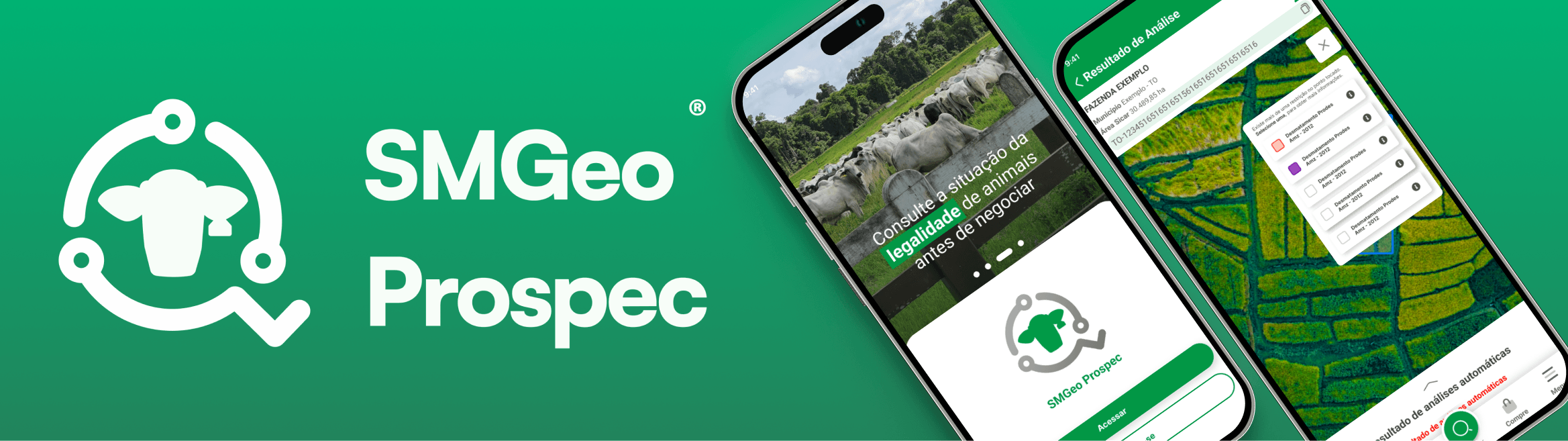

- 1Registration and mapping of properties and suppliers.
- 2Socio-environmental risk analyses (CAR, embargoes, APP, deforestation, etc.).
- 3Classification and auditable technical reports by protocol and supply type.
- 4Technical support for regularization and requalification of areas, when necessary.
- 5Continuous monitoring and automatic alerts via SMGeo and PRIMI.
Learn more
Get answers to common questions about our cattle traceability solutionsubtitle
Yes. PRIMI, SMGeo and Sirflor are compatible with TAC da Carne, EUDR, SARB 026 and private purchase protocols.
Yes. SMGeo ProspeC performs automatic and instant checks in official databases (CAR, embargoes, deforestation, APP).
With Sirflor, which offers technical diagnosis and an environmental requalification plan in accordance with MPF and PRA.
No, but PRIMI is becoming the standard for individual traceability, with the purpose of territorial compliance verification, to ensure commercial security and access to new markets.