
Challenges in the tanning sector
Ensuring the legal and responsible origin of leather is essential to operate in the global market. However, the sector still faces complex challenges.
Difficulty tracing the origin of raw materials to the producing farm.
Manual, poorly standardized processes prone to errors.
Risks of acquiring raw materials from non-compliant farms.
Increasing pressure from national and international clients for ESG-aligned practices.
Exporting leather safely requires
Auditable data, standardized processes and transparency throughout the supply chain. Traceability and transparency are commercial requirements for the luxury market.
EUDR and other international legislation require proof of origin for all exported leather.
Major brands in automotive, fashion, sports and furniture sectors demand full traceability of the production chain.
The market values tanneries with auditable data and integration with global protocols.
Lack of supplier control can lead to loss of contracts and commercial blocks.
The solution: NICEPLANET
Technology, intelligence, and strategy for every stage of your supply chain
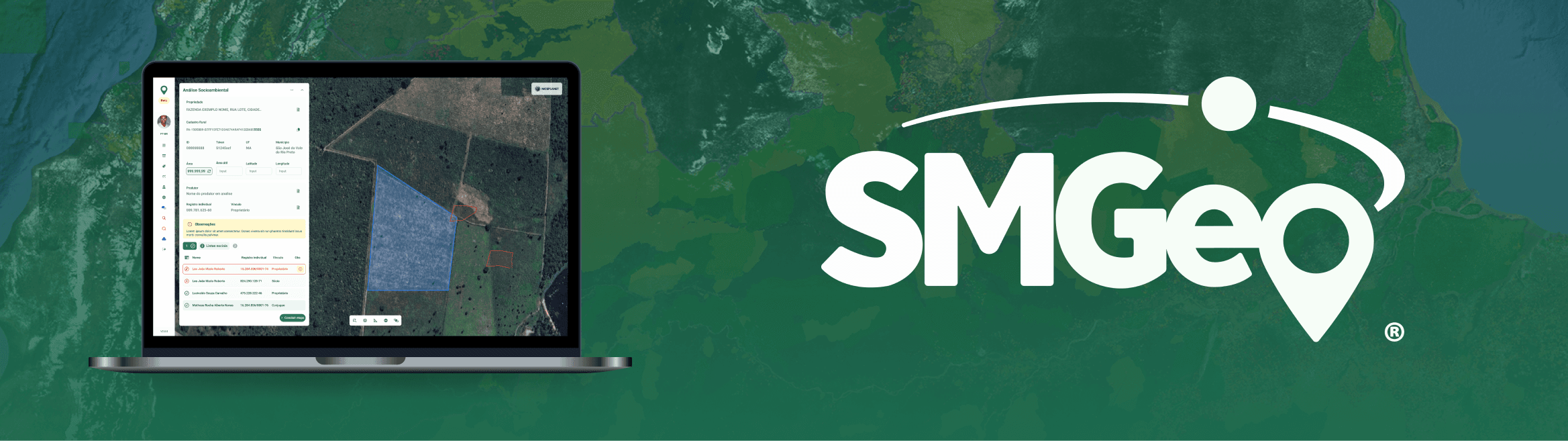

- 1Mapping and registration of supplier farms.
- 2Automatic cross-checking of land and environmental information (CAR, APP, embargoes, deforestation).
- 3Visualization of each batch's compliance according to company or market protocols.
- 4Auditable technical dashboards and reports for certifications and international audits.
- 5Secure data sharing with clients, certifiers and stakeholders.
Learn more
Get answers to common questions about our cattle traceability solutionsubtitle
Yes. NICEPLANET analyses include zero deforestation criteria, land compliance and territorial traceability required by European legislation.
Yes. SMGeo Consulta allows each batch to be linked to its farm of origin, with auditable socio-environmental evidence.
No, it complements the process, offering independent validations and reports compatible with ESG certifications and global brand protocols.
Yes. NICEPLANET solutions have secure and customizable APIs for integration with internal systems.